
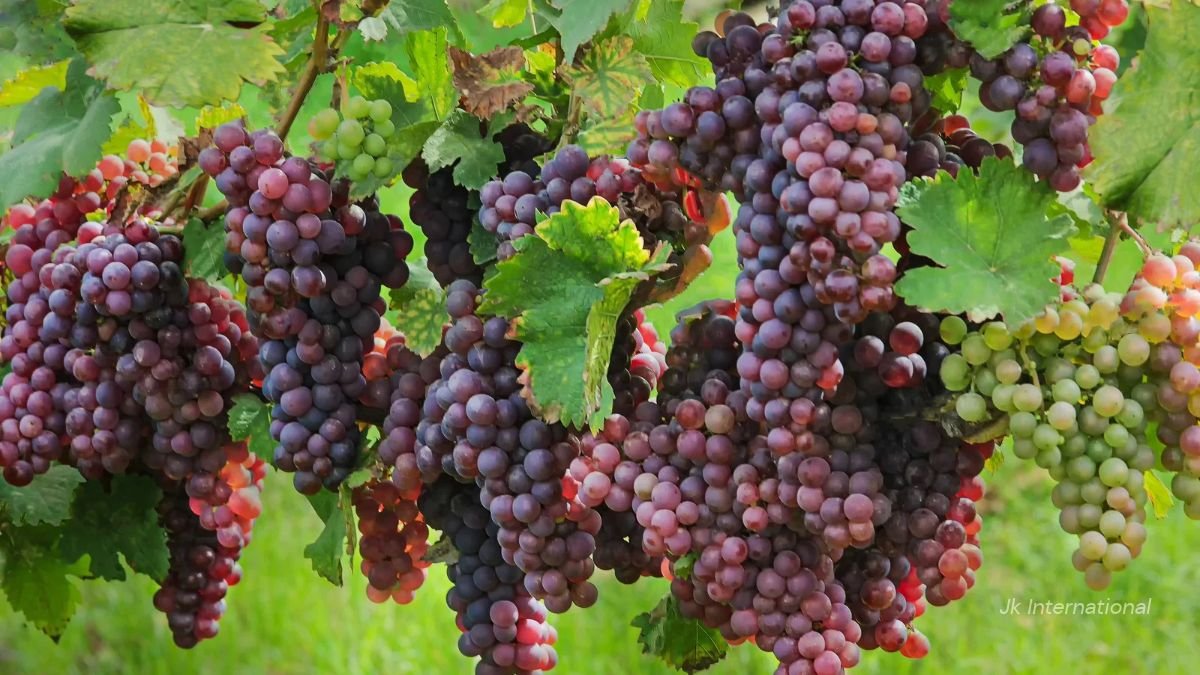
Premium Table Grapes Export from India: Varieties, Season & Packing
India has established itself as an important source of fresh table grapes for international markets, supported by commercial vineyards, modern packhouses and established agricultural export infrastructure. For importers, wholesalers, supermarket chains and fresh produce distributors, Indian grapes offer a range of varieties, attractive appearance, sweet flavor and opportunities for seasonal sourcing.
For businesses searching for a reliable grapes exporter in India, understanding the grape season, available varieties, export grading, packaging, cold-chain management and destination-market requirements is essential. These factors influence product quality, transit performance, shelf life and customer satisfaction.
JK International works with international buyers seeking fresh produce and export-grade grapes. Buyers can explore the company’s grape export range to learn more about its grape sourcing and export offering.
Quick answer: India’s main table grape export season generally runs from January to April, with Maharashtra serving as a major production hub. Thompson Seedless is a leading commercial variety, while Sonaka, Sharad Seedless, Flame Seedless and other varieties serve different buyer preferences. Export-ready grapes require careful grading, suitable packaging, temperature management and compliance with the destination country’s food safety and phytosanitary requirements.
Why Is India an Important Source of Table Grapes?
India’s grape industry benefits from suitable growing conditions, established production clusters and an export supply chain that connects growers, packhouses, exporters and international buyers. Maharashtra is the leading grape-producing state, with important growing areas around Nashik, Sangli and Pune. Karnataka is another significant producer.
According to the Agricultural and Processed Food Products Export Development Authority (APEDA), India exported approximately 224,401 metric tonnes of grapes, valued at about US$367.99 million, during the 2025–26 financial year. Major export destinations included the Netherlands, Russia, the United Kingdom, the United Arab Emirates and Bangladesh.
These established trade relationships make Indian grapes relevant to importers looking for seasonal fresh fruit supplies, although availability and commercial terms vary by variety, harvest conditions and destination market.
For international buyers, key sourcing considerations include:
- Variety selection: Access to green, red and dark-colored grapes with different berry shapes and flavor profiles.
- Seasonal availability: An established harvest window that supports sourcing plans for international distribution.
- Quality control: Sorting, grading, pre-cooling and packaging designed for fresh produce shipments.
- Traceability: Documentation and monitoring procedures that support applicable export requirements.
- Logistics: Refrigerated transport and shipping arrangements designed to protect freshness.
Official industry information is available from APEDA’s overview of Indian grapes.
What Are the Main Export Varieties of Indian Table Grapes?
Indian table grapes are available in multiple colors, sizes and flavor profiles. The right variety depends on the intended market, consumer preferences, retail presentation, transport duration and required shelf life.
Thompson Seedless Grapes
Thompson Seedless is one of India’s leading commercial grape varieties. It is known for its green berries, sweet flavor and seedless eating experience, making it suitable for fresh consumption and several retail applications.
International buyers often consider Thompson Seedless for supermarket distribution, wholesale fresh fruit markets and food service. Its commercial suitability depends on berry firmness, bunch appearance, maturity, handling and the requirements of the destination market.
When sourcing Thompson Seedless grapes for export, importers should confirm the required berry size, color, sweetness, bunch weight and packaging format before placing an order.
Sonaka Seedless Grapes
Sonaka Seedless is valued for its elongated green berries and attractive bunch presentation. Its appearance can make it suitable for premium fresh fruit displays and markets that prefer longer-shaped seedless grapes.
Buyers evaluating Sonaka should consider berry uniformity, bunch structure, skin condition and firmness. These characteristics help determine suitability for retail packs and wholesale distribution.
Sharad Seedless Grapes
Sharad Seedless is a dark-colored grape variety known for its distinctive appearance and sweet flavor. It can appeal to buyers seeking alternatives to conventional green grapes and retailers looking to offer greater variety in fresh fruit displays.
Color consistency, berry condition, bunch integrity and maturity are important quality considerations when preparing Sharad Seedless grapes for export.
Flame Seedless Grapes
Flame Seedless is a red seedless grape variety valued for its attractive color and crisp eating experience when harvested and handled appropriately. Its red appearance can help diversify retail grape selections.
Availability for export should be confirmed against the supplier’s sourcing calendar and the intended shipment date. Buyers should also specify acceptable color, berry size, firmness and packaging requirements.
Other Commercial Grape Varieties
Depending on market demand and seasonal availability, buyers may also explore varieties such as Tas-A-Ganesh, 2A-Clone and other commercially cultivated grapes. Each variety has different growing characteristics and market applications.
For importers, variety selection should be based on customer demand, product specifications, target pricing and the expected journey from packhouse to final destination.
When Is the Indian Table Grape Export Season?
The main Indian table grape export season generally runs from January to April, although harvest timing can vary according to growing region, weather conditions, cultivation practices and variety.
This seasonal window creates opportunities for buyers in the Northern Hemisphere to source Indian grapes during parts of the year when locally grown supplies may be limited or when alternative origins are commercially attractive.
Because fresh grapes are seasonal agricultural products, importers should plan purchasing schedules in advance rather than relying on a fixed availability date for every variety.
Before confirming a shipment, buyers should discuss the following details with their grape supplier:
- Expected harvest and packing dates.
- Available grape varieties and estimated quantities.
- Required berry size, color, sweetness and bunch specifications.
- Sample availability and quality approval procedures.
- Destination port and estimated transit time.
- Applicable export documentation and compliance requirements.
Early coordination can help buyers align purchasing, shipping, customs clearance and distribution schedules with the harvest period.
How Are Export-Grade Indian Grapes Selected and Graded?
Export-grade grapes must meet the agreed product specifications and applicable destination-market standards. Quality evaluation normally considers the condition of individual berries, bunch structure, maturity, appearance and evidence of physical damage or decay.
Although exact specifications vary by buyer and market, important grading factors include:
- Berry size: Uniform berry dimensions help maintain a consistent appearance within each pack.
- Bunch weight: Retail and wholesale customers may request specific bunch-weight ranges.
- Color: Green, red and dark-colored varieties should have an appearance appropriate to their variety and maturity.
- Sweetness and maturity: Sugar content, commonly measured in degrees Brix, can help assess maturity alongside other quality indicators.
- Firmness: Firm berries are generally better suited to handling and distribution than soft or deteriorating fruit.
- Berry attachment: Excessive shattering, or berries separating from the bunch, can reduce commercial quality.
- Skin condition: Splitting, bruising, decay and other defects should be assessed against the agreed specification.
- Cleanliness: Produce should be handled hygienically and meet relevant market requirements.
Some premium retail programs may request bunches weighing approximately 400–600 grams. However, this is not a universal export standard, and the actual requirement should be agreed with the buyer before packing.
Clear written specifications help reduce misunderstandings about acceptable quality, tolerances, pack weight and inspection procedures.
How Are Indian Table Grapes Packed for Export?
Packaging plays an important role in maintaining grape quality during storage, loading, transportation and distribution. Export packaging should protect the bunches from mechanical damage while supporting suitable airflow and the required temperature conditions.
Fresh table grapes are commonly packed in food-grade corrugated cartons designed for fresh produce. A 4.5 kg net carton is one possible commercial format, although the correct pack size depends on buyer requirements and destination-market preferences.
Common export packaging considerations include:
- Food-grade materials: Packaging components should be suitable for contact with fresh produce.
- Ventilation: Cartons should support airflow during pre-cooling and refrigerated transportation.
- Internal protection: Suitable liners or inserts can help reduce abrasion and movement during handling.
- Moisture management: Packaging should be appropriate for the intended temperature and humidity conditions.
- Net weight: Cartons should meet the agreed declared weight and labelling requirements.
- Carton strength: Packaging should be appropriate for stacking and the expected transportation conditions.
- Traceability labels: Lot identification and other required details should be provided according to the relevant regulations and buyer specifications.
Some grape shipments use sulphur dioxide (SO2)-generating pads to help control certain post-harvest decay organisms. Their use must be appropriate for the grape variety, packaging system, shipment duration and applicable food safety requirements. Such pads are not a substitute for good hygiene, correct pre-cooling or uninterrupted cold-chain management.
What Temperature Is Required for Shipping Fresh Grapes?
Temperature management is one of the most important factors in maintaining the quality of fresh table grapes during export. Grapes are perishable, and unsuitable storage conditions can accelerate deterioration, reduce firmness and shorten their marketable life.
Commercial grape shipments may be transported at temperatures around -0.5°C to 0°C, depending on the variety, maturity, packaging system and established handling protocol. The appropriate set point should be confirmed with the supplier and logistics provider rather than applied universally to every shipment.
Effective cold-chain management generally involves several stages:
- Pre-cooling: Removing field heat promptly after harvest using a suitable commercial cooling method.
- Cold storage: Maintaining appropriate conditions before the grapes are loaded for shipment.
- Refrigerated transportation: Using suitable reefer equipment and appropriate airflow settings.
- Temperature monitoring: Reviewing available temperature records to identify potential deviations.
- Arrival handling: Coordinating customs clearance, inspection and transfer to refrigerated storage where required.
Importers should consider the complete logistics journey, including port dwell time and final distribution. Even well-packed grapes can lose quality if exposed to unsuitable conditions for an extended period.
Why Is Pesticide Residue Testing Important for Grape Exports?
Food safety compliance is a critical part of fresh grape exports. International buyers must ensure that imported produce meets the pesticide residue limits and other applicable requirements established by the destination market.
Maximum Residue Limits (MRLs) specify the permitted levels of pesticide residues in food. These limits can differ between importing countries and may change as regulations are updated. Compliance should therefore be verified against the current rules applicable to the specific destination and consignment.
India has established grape residue-monitoring and traceability procedures through APEDA. Its GrapeNet system supports the monitoring and traceability of participating grape export supply chains, including relevant stakeholders involved in production, testing, packing and certification.
For European Union shipments, exporters must follow the applicable procedures for fresh table grapes, including relevant residue monitoring, traceability and phytosanitary requirements. Participation in a monitoring program should not be interpreted as a blanket guarantee that every consignment automatically meets every importing country’s requirements.
International buyers should request and verify relevant documentation, which may include:
- Applicable pesticide residue laboratory reports.
- Farm, plot, lot or consignment traceability information, as required.
- Relevant phytosanitary certificates and export documentation.
- Packhouse and supplier details where applicable.
- Supporting documents required by the importing country or buyer.
Importers can consult APEDA’s official export procedures for current guidance and relevant grape export documentation.
What Documents Are Required for Indian Grape Exports?
Export documentation depends on the destination country, shipment arrangement, product classification and applicable regulations. Buyers and exporters should confirm the exact documentation required before dispatch.
Depending on the transaction, relevant documents may include:
- Commercial invoice.
- Packing list.
- Shipping bill and applicable customs documentation.
- Phytosanitary certificate, where required.
- Certificate of origin, when required by the importing country or transaction.
- Applicable laboratory reports and food safety records.
- Traceability records and consignment identification.
- Transport documents, such as the bill of lading for sea freight.
- Any additional import permits, declarations or certificates required by the destination market.
Not every shipment requires every document listed above. Requirements should be checked with the relevant authorities, customs broker, importer and logistics provider before the goods leave India.
Which Markets Import Indian Table Grapes?
Indian grapes are supplied to several international markets, with export destinations varying by season, variety, commercial demand and market access requirements.
APEDA identifies the Netherlands, Russia, the United Kingdom, the United Arab Emirates and Bangladesh among India’s major grape export destinations for the 2025–26 financial year.
Each market can have different expectations regarding packaging, labelling, product presentation, residue compliance and import documentation.
For example, European buyers may place particular emphasis on residue monitoring, traceability and conformity with applicable EU requirements. Retail customers in other markets may have their own specifications for carton design, bunch weight, variety selection and shelf-life expectations.
Before selecting a supplier, importers should establish their target market, intended sales channel, expected volume and quality specification. This helps determine the most appropriate variety and export arrangement.
How Long Do Indian Table Grapes Last After Shipping?
The marketable life of grapes after shipping depends on the variety, harvest maturity, fruit condition, packaging, pre-cooling, transport duration and temperature history. Handling conditions after arrival are equally important.
Under suitable commercial storage and transport conditions, table grapes may retain marketable quality for several weeks. However, no single shelf-life figure can be guaranteed for every shipment or variety.
To protect product quality after arrival, importers should:
- Arrange prompt inspection and transfer to appropriate storage.
- Review temperature records and shipment condition where available.
- Check berry firmness, bunch condition, moisture and signs of decay.
- Maintain suitable refrigerated conditions during wholesale distribution.
- Rotate inventory according to product condition and planned sales.
Buyers should agree on the expected remaining shelf life at delivery and the inspection procedure before shipment. This is especially important for long-distance sea freight and distribution to multiple retail locations.
How to Choose a Reliable Grapes Exporter in India
Choosing a suitable supplier involves more than comparing the price per carton. Importers need a partner that understands product specifications, seasonal availability, export documentation and the practical requirements of international fresh produce logistics.
When evaluating a grapes exporter in India, consider the following factors:
- Product range: Confirm whether the supplier can source the required varieties, colors, sizes and packaging formats.
- Seasonal planning: Ask for realistic availability estimates and expected packing dates.
- Quality specifications: Request written details covering maturity, berry condition, bunch weight and acceptable tolerances.
- Food safety documentation: Verify relevant laboratory reports, traceability records and destination-specific compliance documents.
- Packing capability: Confirm carton specifications, labelling requirements and packaging suitability for the journey.
- Cold-chain arrangements: Discuss pre-cooling, refrigerated transport, transit time and arrival handling.
- Commercial transparency: Clarify price basis, minimum order quantity, payment terms and responsibility for freight and insurance.
- Communication: Establish a clear process for sample approval, order confirmation, shipment updates and quality-related queries.
A clear agreement before dispatch can help reduce avoidable delays, specification disputes and quality-related misunderstandings.
Why Contact JK International for Table Grapes?
JK International offers an export-focused fresh produce range for buyers exploring Indian grapes and other agricultural products. Its grape export information highlights sourcing from India’s grape-growing regions, including Nashik, Sangli and Pune, along with quality inspection, grading, packaging and cold-chain logistics.
International buyers can explore the company’s grapes export page to learn more about its offering.
When contacting JK International about a prospective grape order, buyers should share the information needed to assess the requirement:
- Destination country and delivery port.
- Preferred grape variety and color.
- Required carton weight and packaging specifications.
- Estimated order quantity and purchasing frequency.
- Expected shipment period.
- Required quality documentation and compliance standards.
- Any sample, inspection or labelling requirements.
Providing these details helps the supplier evaluate the inquiry and discuss availability, pricing and shipment options according to the specific requirement.
For additional information about JK International and its broader product range, visit the official JK International website.
Frequently Asked Questions About Table Grapes Export from India
What is the main season for Indian grape exports?
The main export season generally runs from January to April. Exact availability depends on growing conditions, variety, region and harvest timing.
Which grape variety is most widely grown in India?
Thompson Seedless is a leading commercial variety in India. Other commercially cultivated varieties include Sonaka, Sharad Seedless, Tas-A-Ganesh and 2A-Clone.
What is the typical packaging for export grapes?
Export grapes are commonly packed in food-grade, ventilated corrugated cartons. A 4.5 kg net carton is one possible format, but the required weight and internal packaging should be confirmed with the buyer.
What temperature is used for shipping table grapes?
Commercial shipments may be maintained around -0.5°C to 0°C, subject to variety-specific requirements and the agreed handling protocol. Suitable pre-cooling and temperature management are essential.
Do Indian grapes meet European Union import requirements?
Indian grapes can be exported to the EU when the applicable import, pesticide residue, traceability, phytosanitary and other food safety requirements are met. Buyers should verify the documentation and laboratory results relevant to each shipment.
How can an importer check grape quality before shipment?
Buyers can agree on a written specification and request samples where feasible, inspection records, relevant laboratory reports and details of the proposed packing. Any third-party inspection should be arranged according to the purchase agreement.
How long can table grapes remain fresh after arrival?
Shelf life varies with variety, maturity, packaging, transit conditions and storage after arrival. Grapes can retain marketable quality for several weeks under suitable conditions, but the supplier should confirm the expected remaining shelf life for the specific shipment.
What information should buyers provide when requesting grape export prices?
Buyers should provide the destination, variety, required quantity, carton weight, packaging specifications and preferred shipping period. These details help suppliers prepare a more relevant quotation.
How can I contact JK International for grape export inquiries?
Visit JK International’s official website or explore its grape export page to learn more about the company’s offering and submit an inquiry.
Conclusion: Source Premium Table Grapes from India
India offers international buyers access to commercially important table grape varieties, established growing regions and an export supply chain supported by grading, packing, cold storage and traceability systems.
Successful sourcing depends on selecting the right variety, planning around the harvest season, agreeing on precise quality specifications, maintaining the cold chain and verifying all applicable destination-market requirements.
For importers, wholesalers, supermarkets and fresh produce distributors evaluating Indian grape supplies, JK International is a starting point for exploring available export options and discussing business requirements.
Contact JK International to discuss table grape availability, export pricing, packaging specifications and shipment requirements for your target market. Visit www.jkinternational.net to get started.
- Categories:
- All